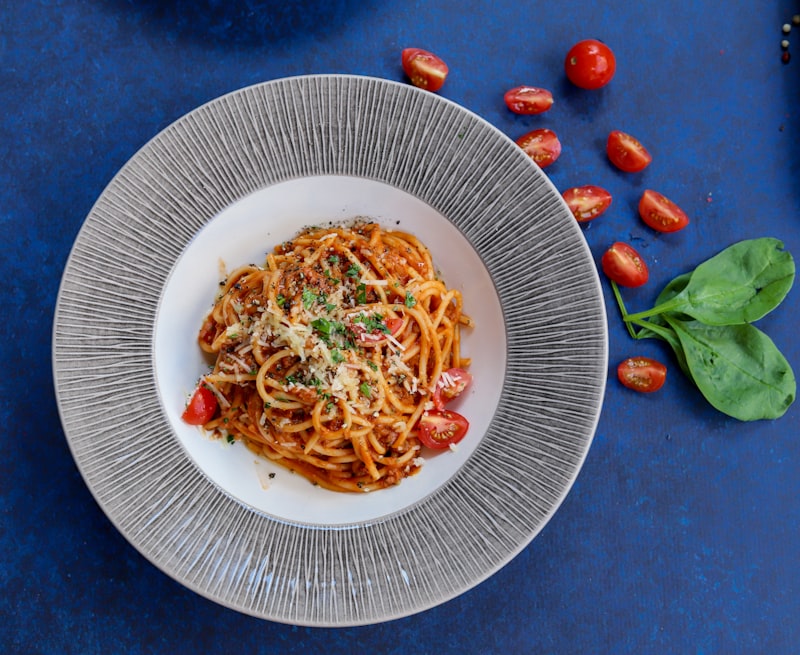
-
1
For the sauce: Put the ground meats in a large bowl; loosen, crumble, and toss the meats together with your fingers.
-
2
Drop the chunks of onion, carrot, and celery into the food processor, and mince fine, to an even-textured paste.
-
3
Pour the olive oil and drop the butter into the big saucepan, and set over medium-high heat.
-
4
When the butter has melted, scrape in the paste, or pestata, season with 1 teaspoon of the salt, and cook and stir the pestata until it has dried out and just begins to stick to the bottom of the pan, about 5 minutes.
-
5
Quickly crumble all the meat into the pan, stir with the pestata, sprinkle over it 1 more teaspoon of salt, and cook, tossing and stirring occasionally, until the meat starts to release its juices.
-
6
Turn up the heat a bit, and continue cooking and stirring the meat as the juices evaporate, about 10 minutes, taking care that the meat doesnt brown or crisp.
-
7
When the juices have disappeared, pour in the white wine, bring it to a bubbling simmer, and cook until evaporated, 2 or 3 minutes.
-
8
Meanwhile, stir the tomato paste into the milk until blended.
-
9
When the wine has cooked away, pour in the milk and cook, stirring, until it has cooked down.
-
10
Now ladle 2 cups or more of the hot stock (or water) into the pan, just enough to cover the meat.
-
11
Stir in the bay leaves and the remaining salt, and bring the liquid to an active simmer.
-
12
Cover the pan, adjust the heat so the liquid is steadily bubbling (not boiling rapidly), and cook for 15 to 20 minutes, as the broth gradually reduces.
-
13
Stir in about 2 more cups hot stock, just to cover the meat again, then give another 20-minute period of covered cooking and reducing.
-
14
Stir in a final addition of 2 cups stock, and cook, covered, until the ragu is thick and concentrated, 20 minutes or so.
-
15
(The sauce should have cooked for at least an hour and incorporated 6 to 8 cups of stock in total.)
-
16
Taste the ragu and adjust the seasoning.
-
17
If youve prepared it in advance, let it cool, then refrigerate and freeze as you wish.
-
18
Or you can remove about half (for future use) and prepare tagliatelle now, keeping about 3 1/2 cups of freshly cooked sauce in the big saucepan, to dress the pasta.
-
19
To cook the tagliatelle: Bring a large pot of well-salted water to the boil.
-
20
Shake the nests of tagliatelle in a colander or strainer to remove excess flour.
-
21
Drop all the pasta into the pot at once, and stir to loosen and separate the strands.
-
22
Cover the pot, and return the water to a boil rapidly.
-
23
Set the cover ajar, and cook the pasta, stirring occasionally, for 2 minutes or more, until barely al dente (the pasta will cook a bit more in the pan of sauce).
-
24
Meanwhile, heat the ragu to a simmer.
-
25
If it has cooled (or been chilled or frozen), it will have thickened, so reheat it slowly in a wide pan, stirring in a cup or so of stock or water, to loosen it.
-
26
Lift the al dente tagliatelle from the cooking pot quickly, with a spider and tongs, drain briefly, and drop the pasta into the simmering ragu.
-
27
Toss together, over low heat, for a minute or more, until all the strands are coated and perfectly cooked.
-
28
Thin the sauce, if necessary, with hot pasta water, or thicken it quickly over higher heat.
-
29
Turn off the heat, sprinkle a cup or so of grated cheese over the tagliatelle, and toss well.
-
30
Finish with a drizzle of olive oil, toss again, and heap the pasta in warm bowls.
-
31
Serve immediately, with more cheese at the table.