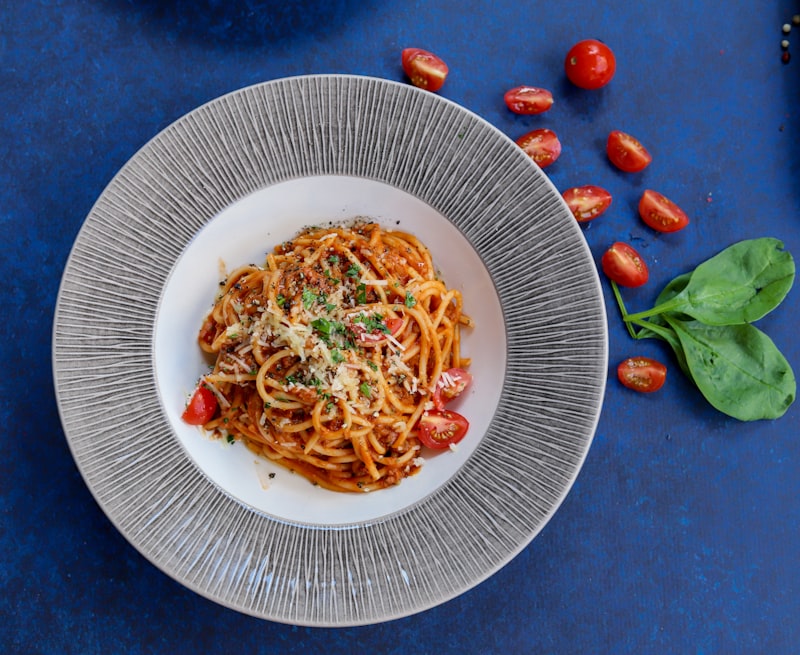
-
1
Start heating 6 quarts of water with 1 1/2 tablespoons kosher salt in the pasta cooking pot.
-
2
Have all the ingredients for the simple sauce measured and at hand.
-
3
Have both skillets on the stove, ready to start cooking.
-
4
For the frittata, snap off the tough bottom stubs of the asparagus and peel the thick skin from the lower 4 inches of each spear.
-
5
Slice the spears, including the tips, crosswise or slightly on the diagonal, into 1/8-inch-thick rounds or ovals.
-
6
You should have 2 cups of small asparagus pieces.
-
7
Crack the eggs into a bowl and whisk them well with the milk, 1/2 teaspoon of salt, and several grinds of black pepper.
-
8
Pour the 1/3 cup olive oil into the big pasta skillet, scatter the garlic slices in the oil, and set over medium heat.
-
9
Cook for 2 or 3 minutes or so, shaking the pan now and then, until the garlic is sizzling and starting to color.
-
10
Toss the scallions into the skillet, stir with the garlic and oil, and cook for 2 1/2 to 3 minutes, over medium heat, until the scallions are very soft and wilted and the garlic is golden.
-
11
While the scallions are cooking, stir in 1/2 teaspoon of salt and a generous amount of freshly ground black pepper.
-
12
Take 2 cups of boiling water from the pasta pot and pour it into the skillet.
-
13
Stir up the scallions and garlic, and adjust the heat so the liquid is simmering gently.
-
14
Pour the 1/4 cup of olive oil into the empty non-stick skillet, scatter in the sliced asparagus, and turn on medium heat.
-
15
Let the pieces heat and start to sizzle, about 2 minutes; stir and toss now and then.
-
16
As soon as youve started the asparagus, push the spaghetti into the boiling water.
-
17
Stir as it softens, and bring the water back to the boil as rapidly as possible.
-
18
Start timing the pasta to under cook as required, about 8 minutes.
-
19
Now take 1/4 cup or so of water from the pasta pot and pour it in with the sizzling asparagus.
-
20
Season with grinds of black pepper and 1/4 teaspoon of salt.
-
21
Stir, toss, and cook the slices until theyre cooked through but still bright green, about 4 minutes.
-
22
Moisten with more pasta water if the slices seem dry.
-
23
While the spaghetti and the asparagus cook, make sure theres a good layer of simmering liquid in the scallion-sauce skillet; add more pasta water if needed.
-
24
When the asparagus slices are tender, turn down the heat a bit and pour in the eggs.
-
25
Let set for about 1/2 minute, then stir the thickening eggs and the asparagus with a wooden spoon.
-
26
Continue turning the curds over for a minute, so they are evenly heated but still quite wet and soft.
-
27
Remove from the heat.
-
28
Check the spaghetti; when it is almost but not quite al dente, lift the pasta from the pot and drop it into the simmering simple sauce.
-
29
Raise the heat if it was very low, and add more hot pasta water if the pasta seems dry.
-
30
Toss and cook the spaghetti and scallion sauce together for 1/2 minute, mixing well.
-
31
Scrape the frittata on top of the pasta and toss it in, breaking the frittata into small pieces.
-
32
If any eggs are stuck in the pan, loosen them with a slosh of pasta water and toss that into the pasta skillet too.
-
33
Toss for a minute or more, still over heat, until the pasta is perfectly cooked and the frittata is well distributed.
-
34
Remove the skillet from the heat, drizzle 1 or 2 tablespoons of olive oil over, and toss.
-
35
Sprinkle on the grated cheese and toss.
-
36
Grind black pepper on abundantly.
-
37
Serve right away.
-
38
When adding cheese, take the pan off the heat before you toss it in.
-
39
Otherwise, the cheese can overheat and separate into oily and stringy components.
-
40
I always recommend either Parmigiano-Reggiano or Grana Padano for finishing a past with cheese.
-
41
Keep either or both as staples in your refrigerator.
-
42
Pasta dishes should always be served hot, as soon as the dish is finished.
-
43
For family meals, I bring the skillet to the table and serve portions directly into warm bowls.
-
44
For more formal occasions, I dish it up into warm bowls in the kitchen and bring them quickly to the table.
-
45
The shorter the trek from the hot skillet to the individual bowl, the better.
-
46
Be sure to pass a bowl of freshly grated cheese around the table.