-
1
To brine the tongue, mix the salt with the water in a large bowl and submerge the tongue in it.
-
2
Refrigerate for 6 hours or overnight.
-
3
Bring the ingredients for the poaching liquid to a boil in a pot large enough to accommodate the tongue later, and let boil vigorously for 20 minutes.
-
4
Remove the tongue from the brine, and lower it into the boiling broth.
-
5
Cook, partially covered, at a lively simmer for 1 1/4 hours, then turn off the heat and leave the tongue submerged in the hot liquid for at least 1/2 hour.
-
6
While the tongue is resting, get the potatoes and parsnips going (recipe follows).
-
7
Fish the tongue out of the broth, and as soon as it is cool enough to handle, remove the peel (the warmer the tongue, the easier that will be).
-
8
Following the photographs, start at the butt end to remove the peel; once you have gotten started, it should come off quite easily in big pieces.
-
9
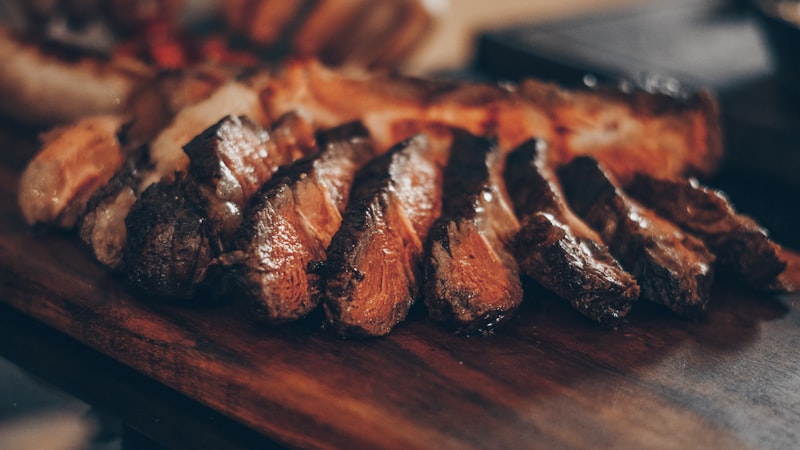
Trim away any gristle and fat at the butt end, and when ready to serve, cut into slices.
-
10
Serve the tongue warm with the potato, parsnip, and scallion mash and at least one of the recommended condiments.
-
11
The grated horseradish should be sprinkled on while the tongue is still warm, to infuse the slices with its sharp flavor.
-
12
Leftover tongue is delicious cold, with the suggested sauces or others in this chapter.
-
13
It makes a great sandwich with some mustard.
-
14
Peel the baking potatoes, cut them in half, and submerge them in a pan of cold water to cover.
-
15
Bring to a boil and cook 20 minutes, then add the parsnips and cook another 20 minutes, until both are tender.
-
16
If the parsnips are getting too soft, fish them out of the pot with a wire sieve.
-
17
When both the potatoes and parsnips are done, put them through a ricer, or strain and mash them in a bowl, with the butter and salt.
-
18
Fold in the scallions.
-
19
If the mash has to wait a little while before being served, put the bowl in a skillet with a small amount of boiling water, and simmer to keep warm.