-
1
Rinse the ribs and pat dry.
-
2
Massage 1/2 cup of the dry rub over both sides of each slab to coat evenly.
-
3
Cover and let marinate, refrigerated, for 2 to 3 hours or overnight.
-
4
About 30 minutes before youre ready to cook, remove the ribs from the refrigerator, rub with the remaining 1/2 cup dry rub, and let come to room temperature.
-
5
Preheat the oven to 325F.
-
6
Spread the onion in a single layer on a rimmed baking sheet and place the ribs on top; pour the beer over and around the meat.
-
7
Cover tightly with foil and cook for 1 1/2 hours, until the ribs are fork-tender (see Know-how, page 172).
-
8
About 30 minutes before youre ready to grill, prepare a hot fire in a charcoal or gas grill and let the coals burn to gray ash with a slight red glow; if using a gas grill, heat the grill on medium.
-
9
Place the ribs on the grill and, if you wish, baste with Says Vinegar Barbecue Sauce.
-
10
Close the grill or cover the ribs with foil and cook, turning and basting occasionally, for about 30 minutes, or until lightly charred and smoky.
-
11
Remove the ribs from the grill and transfer to a cutting board.
-
12
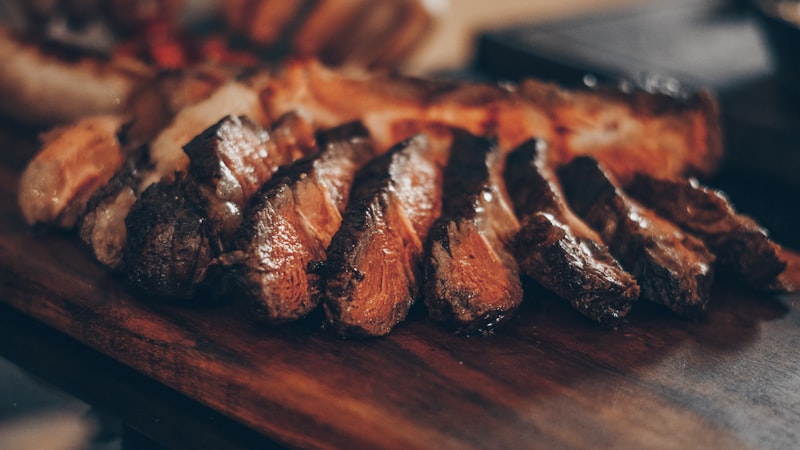
Slice the racks into 3- to 4-rib slabs and serve warm over the beer-basted onions with more barbecue sauce on the side.
-
13
Combine the paprika, brown sugar, mustard, cayenne, salt, onion, red pepper flakes, garlic, black pepper, thyme, and oregano in a small airtight container and shake to thoroughly mix.
-
14
The rub will keep for up to 1 month sealed and stored in a cool, dry place.
-
15
Spare ribs are cut from the underbelly or lower rib cage of a pig, which explains why they are so fatty and succulent.
-
16
But even spare ribs have their tough parts.
-
17
The way to handle this is to have your spare ribs cut St. Louisstyle.
-
18
On ribs butchered this way, the tough, fatty-end portion of the rib tips is removed, as is the skirt, which is a tough flap of meat attached to the bony side of the ribs.
-
19
This makes the ribs look more rectangular and reduces their size to about that of baby back ribs.
-
20
More important, they are much more tender.
-
21
More and more small-scale Southern farmers are embracing pigs.
-
22
Even better, they are looking to heritage breeds, like Ossabaws, Red Wattles, Tamworths, and Berkshires, and sustainable growing practices to produce top-notch, humanely raised pork.
-
23
Not only is the flavor a thousand times better, but its good for the environment, the local economy, andat least in comparison to factory farmingfor the pigs themselves.
-
24
Producers like these are one of the most exciting aspects of Southern food right now.
-
25
I encourage you to consult Sources (page 377) or, even better, your local farmers market, to see if you can find similar producers in your own neighborhood.