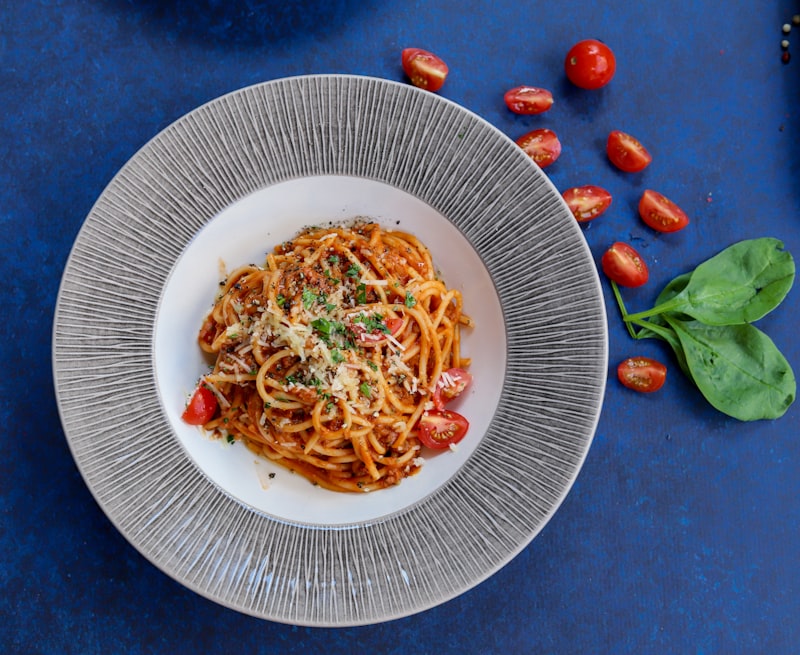
Try this homemade Fresh Egg Pasta recipe the whole family will love. Made with flour, eggs and olive oil. Easy step-by-step instructions included.
This Fresh Egg Pasta relies on simple, everyday ingredients such as large eggs, beaten. It comes together quickly and makes 4 servings, at about 154 kcal each. The step-by-step instructions below are written to be easy to follow, even on a busy day.
It's versatile enough for an easy weeknight dinner yet satisfying enough for guests at the weekend. Serve it with your favorite sides, and keep any leftovers for a quick meal the next day.
Updated Jun 30, 2026
-
1
To Make Fresh Spinach Pasta:
-
2
Pasta made with fresh spinach has not only a bright green color but also a good flavor.
-
3
To make fresh spinach pasta, use 3 cups flour, 3 large eggs, and 1 pound of fresh spinach, cooked, squeezed dry, and very finely chopped (about 3/4 cup cooked spinach).
-
4
Combine the ingredients as for Fresh Egg Pasta belowt.
-
5
Preparing the Dough by Hand:
-
6
Pour the flour into a mound on a countertop or large pasta board.
-
7
A rough surface such as wood or plastic is better than a smooth one such as marble or granite.
-
8
With a fork, make a wide hole in the center of the mound.
-
9
Pour the eggs and olive oil into the hole and begin stirring with one hand, gradually incorporating some of the flour from the inside of the hole.
-
10
Use your other hand to support the wall of flour surrounding the eggs, so they dont spill out.
-
11
When the dough forms a ball and becomes too firm to stir, in about 1 minute, sweep the remaining flour to one side.
-
12
Lightly flour your hands and begin kneading.
-
13
Push the dough away with the heels of your hands and pull it back toward you with your fingertips.
-
14
Turn the dough as you are doing this for even kneading.
-
15
Continue kneading, gradually incorporating some of the remaining flour until the ball becomes somewhat smooth, feels moist, and is only slightly sticky, about 3 minutes.
-
16
Add only enough flour to create a firm ball of dough, or it may become too dry.
-
17
Put the dough aside for a moment and cover it with an inverted bowl.
-
18
Wash and dry your hands to remove hardened scraps of dough.
-
19
Scrape the kneading surface clean with a plastic or metal dough scraper or spatula to remove any hardened pieces of dough and excess flour that might later cause lumps.
-
20
Throw out the scraps.
-
21
Lightly dust your hands with flour.
-
22
Resume kneading the dough until it is smooth and elastic, moist yet not sticky, about 8 to 10 minutes.
-
23
Add more flour if necessary.
-
24
There should be no streaks of flour on the dough, and the color should be evenly yellow.
-
25
The more the dough is kneaded, the lighter and more resilient the pasta will be, so do not skimp on kneading.
-
26
Work quickly so that the dough does not dry out.
-
27
Making the Dough with a Food Processor or Heavy-Duty Mixer:
-
28
Pour the eggs and olive oil into a food processor fitted with the steel blade, or into the bowl of a heavy-duty electric mixer fitted with the flat beater.
-
29
With the machine running, begin adding the flour a tablespoon at a time.
-
30
Mix until the dough forms a ball and cleans the inside of the bowl, about 1 minute.
-
31
Pinch the dough.
-
32
It should feel moist but not sticky and should be fairly smooth.
-
33
If not, add more flour as needed.
-
34
Place the dough on a lightly floured surface and knead it for 1 minute, adding more flour if necessary, until it is firm, smooth without streaks of flour, and moist but not sticky.
-
35
Spinach Pasta: Pasta made with fresh spinach has not only a bright green color but also a good flavor.
-
36
To make fresh spinach pasta, use 3 cups flour, 3 large eggs, and 1 pound of fresh spinach, cooked, squeezed dry, and very finely chopped (about 3/4 cup cooked spinach).
-
37
Combine the ingredients as for Fresh Egg Pasta at left.
-
38
Letting the Dough Rest:
-
39
Whether you have made it by hand or machine, cover the dough with an inverted bowl and let it rest for 30 minutes or up to 2 hours at room temperature.
-
40
Rolling Out the Dough By Hand:
-
41
Lightly dust a countertop or large board with flour.
-
42
Be sure that the surface is perfectly flat and not warped.
-
43
Cut the dough into 2 pieces.
-
44
It may feel moister after it rests because the eggs have absorbed the flour.
-
45
While you work with one piece, keep the remainder covered.
-
46
With your hands, shape one piece of dough into a disk.
-
47
Choose a wooden rolling pin at least 24 inches long and 1 1/2 to 2 inches wide and dust it lightly with flour.
-
48
Place the pin in the center and push it away from you toward the edge of the dough.
-
49
Rotate the dough a quarter turn, center the pin on it and push it toward the edge once more.
-
50
Repeat, rotating the dough and rolling it out from the center, keeping the shape round and the thickness even, until the dough reaches the desired thinness.
-
51
Flip the dough over from time to time to be sure it is not sticking.
-
52
If necessary, dust lightly with flour.
-
53
Work quickly so that the dough does not dry out.
-
54
If it should tear, pinch it together or patch it with a small piece of dough from the edge.
-
55
The dough is ready when it is very thin and you can easily see your hand through it when it is held up to the light.
-
56
Roll out the remaining dough in the same way.
-
57
Be sure to make all of the dough pieces of equal thickness.
-
58
Turn the pieces often so that they do not stick.
-
59
If the dough will be used to make stuffed pasta such as ravioli, it should be kept covered so that it remains pliable.
-
60
Use it as soon as possible.
-
61
Cut the dough into the desired size and shape while it is still soft and pliable.
-
62
Rolling Out the Dough with a Pasta Machine
-
63
Following the manufacturers instructions, clamp the pasta machine to one end of a large countertop or sturdy table.
-
64
Set the rollers at the widest opening and dust them lightly with flour.
-
65
Cut the dough into 4 to 6 pieces.
-
66
It may feel moister after it rests because the eggs have absorbed the flour.
-
67
While you work with one piece, keep the remainder covered.
-
68
Flatten one piece of dough into an oval disk.
-
69
Turn the handle of the pasta machine with one hand while the other guides the piece of dough through the rollers.
-
70
If the dough sticks or tears, dust it lightly with flour.
-
71
Remove the dough from the machine and fold it lengthwise into thirds.
-
72
Pass the dough through the machine again, flouring it if necessary.
-
73
Close the rollers slightly by moving the dial to the next notch.
-
74
Pass the dough through the rollers.
-
75
As the dough emerges, lift it straight out so that it stays flat without wrinkling.
-
76
Do not fold it.
-
77
Continue to pass the dough through the machine, moving the dial up one notch each time until the desired thinness is reached.
-
78
This will vary according to the machine, but I usually stop at the second-to-last setting for fettuccine and flat pasta and the last notch for stuffed pasta.
-
79
The pasta should be thin enough that you can see your hand through it without tearing.
-
80
Dont be tempted to re-roll scraps of dough.
-
81
Hardened edges can stick in the machine and tear the pasta.
-
82
Lay the strip of dough on a lightly floured kitchen towel.
-
83
Roll out the remaining dough in the same way.
-
84
Be sure to make all of the strips of equal thickness.
-
85
Turn the pieces often so that they do not stick.
-
86
If the dough will be used to make stuffed pasta such as ravioli, it should be kept covered so that it remains pliable.
-
87
Use it as soon as possible.
-
88
Cut the dough into the desired size and shape while it is still soft and pliable.
-
89
Making Pasta Noodles:
-
90
Lasagne, papardelle, fettuccine, tagliatelle, and tagliarini are all flat ribbons of pasta.
-
91
Their use depends on the type of sauce you are making and regional preferences.
-
92
Generally, the lighter the sauce, the narrower the pasta.
-
93
Make the pasta as described above.
-
94
Let the dough dry until it is slightly leathery but still pliable, about 20 minutes.
-
95
If using your pasta machines cutting attachment, follow the manufacturers instructions.
-
96
Turn the crank with one hand, passing the sheet of dough through the cutters.
-
97
As the dough emerges, lift it straight out with your other hand so that the strands do not collect on the countertop and become wrinkled.
-
98
If working by hand, first cut the dough into 5-inch lengths for pappardelle and 10-inch lengths for the other pastas.
-
99
Loosely roll up a strip of dough.
-
100
With a large heavy chefs knife, cut the rolled up pasta crosswise into strips 3 inches wide for lasagne, 3/4 inches wide for papardelle, 1/3 inch wide for fettuccine, 1/4 inch for tagliatelle, and 1/8 inch for tagliarini.
-
101
Separate the strips and place them flat on a floured surface to dry about 1 hour at room temperature.
* Per serving · 4 servings · Values may vary.
Tips for the best results
- Read through all the steps once before you start and measure out your ingredients first — it makes everything go more smoothly.
- Taste as you go and adjust the seasoning before serving.
- Avoid overcrowding the pan — cook in batches if needed for the best texture.
- Let the dish rest for a few minutes before serving so the flavors settle.
- Store leftovers in an airtight container in the fridge and enjoy within a few days.
Variations & substitutions
- A good 1:1 gluten-free flour blend works well if you need a gluten-free version.
No specific allergen information. Please check the ingredient list for possible allergens.
My Personal Notes
Saved locally in your browser — visible only to you.
How did you like this recipe?
Frequently Asked Questions
This recipe makes 4 servings. You can adjust the portion size directly on this page.
You need 3 ingredients. The key ingredients include: About 2 1/2 cups unbleached all-purpose flour, 4 large eggs, beaten, 1 teaspoon olive oil (optional, but a good idea, especially for stuffed pastas).
Yes, Fresh Egg Pasta falls under the Pasta & Noodles category and is a great choice for this type of meal.
Store leftovers in an airtight container in the refrigerator for up to 3–4 days. Reheat gently before serving.