-
1
To make the filling: Put the bread cubes in a mixing bowl, and pour in enough water to cover them.
-
2
Toss the cubes in the water, and let them soak it up for a few minutes.
-
3
When theyre saturated, dump the cubes into a strainer (along with any water remaining in the bowl), and squeeze the bread to get out most of the water.
-
4
Put the soft, wet bread back in the bowl, tearing it into shreds with your fingers.
-
5
Scatter the grated cheese, chopped garlic, and parsley over the bread, and stir everything together vigorously (or work together with your hands) into a spreadable paste.
-
6
Lay out the butterflied lamb leg, and trim any thick fat from the outside surface (a few traces are okay).
-
7
If the boneless leg was rolled and tied by the butcher, cut away the strings or netting, then unroll it and trim any thick fat.
-
8
Turn the meat over so the inside of the leg (where the bone was) faces up, and arrange it to form a flat, solid oblong slab.
-
9
If necessary, pound or butterfly thick muscles so the meat slab is evenly thick.
-
10
Drop mounds of the bread paste on the lamb, and spread it to cover the whole surface, leaving a margin around the edges (so it wont ooze out).
-
11
Now roll up the meat to form a snug, loaf-shaped roll.
-
12
Loop short pieces of twine around the roll every few inches along its length, to keep it in shape, and knot securely.
-
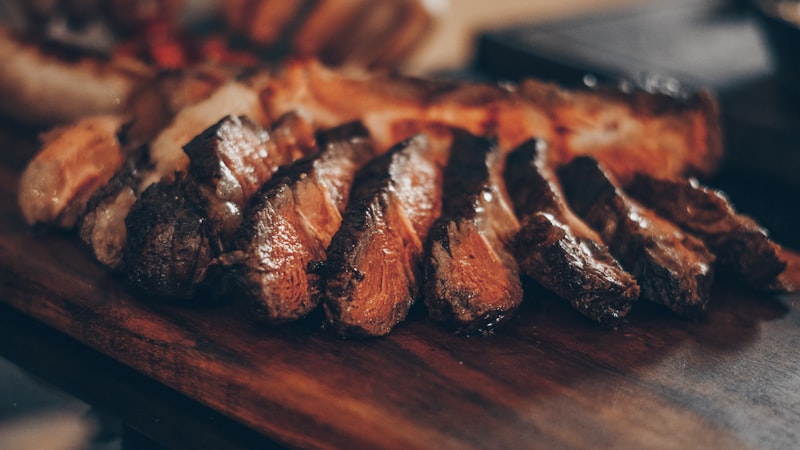
13
Press and tuck in the flaps of meat at the ends of the roll, and secure them with twine looped lengthwise around the roll and tied tight.
-
14
If you have butchers netting, slip it over the rolled meat, and stretch first, then tie it securely.
-
15
Season the outside of the tied roll with 1 1/2 teaspoons salt.
-
16
Pour the olive oil into the big pan, and set over medium-high heat.
-
17
Lay the meat in the hot oil, and let it sizzle for a minute or two without moving, until browned on the bottom.
-
18
Rotate the roll, and brown more of the meat surface for a couple of minutes, then rotate again, until the lamb leg is nicely caramelized all over.
-
19
Push the meat to the side of the pan, clearing as much space in the middle as possible, and spill in the chopped onions.
-
20
Stir and spread them in the pan as they start to sizzle, scraping up the bits of caramelization from the pan bottom; shift the lamb to stir the onions all around.
-
21
After 4 or 5 minutes, when the onions have softened, drop in the bay leaves, rosemary, and thyme, and stir for another minute, to toast the herbs.
-
22
Move the meat to the center of the pan, and pour the crushed tomatoes around it.
-
23
Slosh out the tomato bowl and cans with 2 cups water, and pour that in, along with more water if needed, until three-quarters of the rolled lamb is submerged in the liquids.
-
24
Sprinkle the remaining 1 1/2 teaspoons salt all over, and stir the tomatoes, water, onions, and seasonings together.
-
25
Cover the pan, and bring the braising liquids to a boil over high heat, then adjust the flame to keep a steady, gentle bubbling around the lamb.
-
26
Cook, tightly covered, checking the liquid level occasionally to see that it is not cooking too fast or reducing rapidly.
-
27
Every 40 minutes or so, rotate the meat so the top of the roll gets submerged, and add water, if needed, to maintain the level of braising liquids.
-
28
Reduce until the liquid covers three-quarters of the lamb.
-
29
Cook the lamb for 2 to 2 1/2 hours, or until a long fork can pierce the thickest part of the leg and slide out easily.
-
30
If the sauce is concentrated and velvety, the dish is done; turn off the heat, and let the leg rest in the sauce for 30 minutes or longer before serving.
-
31
If the meat is tender but the sauce is too thin, transfer the meat to a platter (in a warm place) and cook the sauce uncovered, reducing it to a velvety consistency.
-
32
If you want to dress pasta with the sauce, however, dont let it get too thick.
-
33
Turn off the heat, and replace the lamb in the sauce to rest.
-
34
After the rest period, remove the lamb leg and finish the sauce: Pick out the herb stems and bay leaves, skim off any fat that has collected on the top, and taste and adjust the seasoning.
-
35
Serve the sauce as is, or pass it through a food mill if you want it to be smoother (and to remove the rosemary leaves).
-
36
To serve the lamb: Cut and remove the twine or netting.
-
37
Slice the leg crosswise into 1/2-inch-thick slices, and arrange them, fanned out or overlapping, on a warm platter.
-
38
Moisten the slices with spoonfuls of warm sauce, and pass more sauce at the table.
-
39
This braised lamb also makes an excellent primo (pasta course).
-
40
To serve as a primo: Put 2 cups of sauce (for each pound of pasta) into a big skillet, and heat to a simmer while the pasta cooks.
-
41
Drop the drained al dente pasta into the sauce, and toss until coated, then shut off the heat, and toss with grated pecorino or Grana Padano or Parmigiano-Reggiano.
-
42
Serve immediately in warm bowls.
-
43
To cook the lamb a few hours or even a day in advance, let it cool in the sauce and refrigerate overnight.
-
44
To serve, slice the meat while its cool.
-
45
Put a shallow layer of sauce in a wide skillet, and lay in the lamb slices.
-
46
Slowly heat the sauce to bubbling, spooning it over the meat until heated through.
-
47
Arrange the slices on a platter.