-
1
In a mortar with a pestle, grind the rosemary, ginger, chile pepper, garlic, and 1 tablespoon sea salt to a paste.
-
2
With a short, sharp knife, make 1/2- by 1/2-inch slits over the surface of the pork.
-
3
Rub the aromatic paste over the pork, pushing it into the slits.
-
4
Cover the pork loosely with plastic wrap and permit it to absorb the paste for several hours at cool room temperature.
-
5
In a very large terra-cotta or enameled cast-iron casserole over a lively flame, heat the olive oil and brown the pork, sealing and crusting it well on all sides, a task that takes at least 10 minutes.
-
6
Remove the pork to a holding plate.
-
7
Lower the flame a bit and add the wine to the casserole, stirring, scraping at the residue for 1 minute before adding the wine vinegar, the tomato puree, and the pork.
-
8
Bring the mixture to a simmer, cover the casserole with a slightly skewed lid, and braise the roast gently.
-
9
Cook the pasta in abundant, boiling, sea-salted water for 1 minute.
-
10
Drain the pasta and set it aside.
-
11
After the pork has been braising for 1 hour, test its readiness.
-
12
If its flesh is fork-tender, it is braised properly.
-
13
If not, let it simmer away for another 20 minutes.
-
14
When the pork is cooked, add the pasta to the casserole, tossing it about to moisten it thoroughly with the braising liquors.
-
15
Cover the casserole and continue a quiet braise for 5 minutes, permitting the pasta to finish cooking and absorb the good juices.
-
16
Let the dish rest for 5 minutes before carrying it to table.
-
17
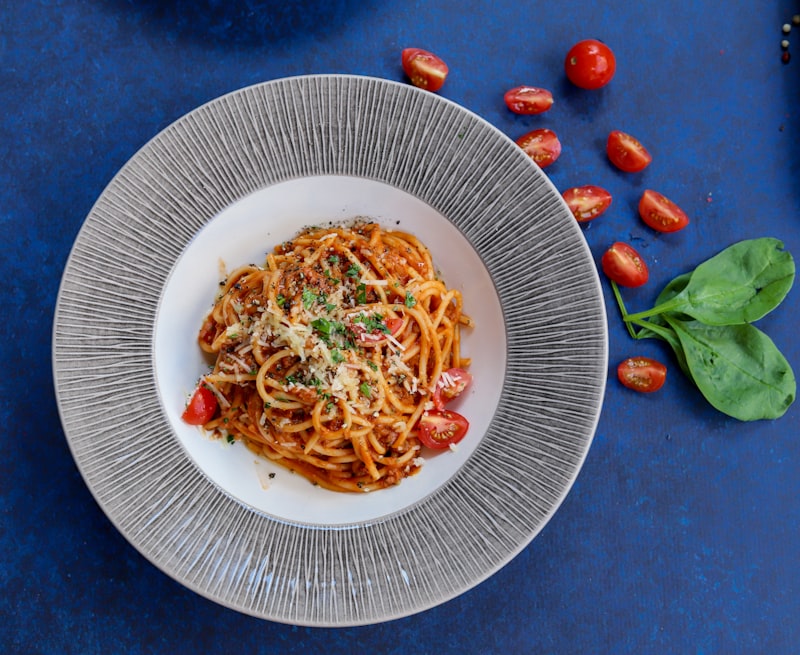
Carve the roast into thick slices there, laying one over each serving of the pasta, with spoonfuls of the good sauce.
-
18
Pass the just-grated pecorino.