-
1
Prepare the duck breasts: rinse and pat them dry.
-
2
Using a sharp knife, score the duck skin in a crisscross pattern, taking care to cut only through the skin and fat, avoiding the duck flesh.
-
3
Grind the coriander and peppercorns in a spice grinder or coffee mill, or crush well using a mortar and pestle.
-
4
Add the garlic and salt, spin or mash to a coarse puree, and rub into both sides of the duck, working some of the paste into the flesh between the score marks.
-
5
Set aside while you start the sauce.
-
6
Preheat the oven to 300 degrees F.
-
7
Prepare the sauce: rinse, quarter, and peel the quinces.
-
8
Using a very sharp knife, cut out the core, seeds, and any other hard bits.
-
9
Cut the quinces into large chunks.
-
10
Pulse the walnuts in a food processor to a mixture of fine and coarse crumbs.
-
11
In a large heavy Dutch oven or casserole, heat the oil over medium heat until it shimmers.
-
12
Add the onions and saute, turning occasionally as they soften and then turn golden.
-
13
Adjust the heat to medium-high and add the quinces.
-
14
Cook until the fruit begins to speckle a deep caramel in places, lifting and tossing to avoid burning.
-
15
Add the garlic, sprinkle with salt and pepper, and cook for 3 minutes to blend the flavors.
-
16
Stir in the ground walnuts and briefly saute, stirring, until their aroma arises.
-
17
Stir together the pomegranate juice and pomegranate molasses, and add along with the broth and dates.
-
18
Bring the mixture to a boil, then cover and transfer to the oven, occasionally giving it a stir as it cooks.
-
19
(You can simmer the sauce on top of the stove, if you prefer.
-
20
I find the oven heat gentler and more even, causing less evaporation, and besides, I usually need the extra burner space on the stove.)
-
21
When the sauce has been in the oven for about 45 minutes, choose a very large, heavy, ovenproof skillet (cast-iron is ideal here; if necessary, use 2 skillets or work in batches) and film it with oil.
-
22
Place the skillet over medium heat until hot.
-
23
Add the duck breasts, skin side down.
-
24
Cook, shaking the pan occasionally or sliding a spatula under the breasts if they threaten to stick.
-
25
Press down on the breasts with a spatula now and then to release more fat, and pour out the rendered fat as it accumulates; if the fat rises up to the duck flesh, its high temperature may toughen the meat.
-
26
Continue cooking until the skin is well bronzed, about 10 minutes.
-
27
Pour off any remaining fat from the pan, turn the duck skin side up, and put the skillet in the oven alongside the sauce.
-
28
(Or, if you sauteed the duck breasts in batches or in 2 skillets, you can place all of them in one large baking pan.)
-
29
Slow-roast until the duck breasts are cooked to the desired doneness, 10 to 15 minutes, or until they feel springy to the touch and a thermometer inserted horizontally into the center of a breast registers 135 degrees F for medium-rare or 140 degrees F for medium.
-
30
Transfer the duck to a cutting board and let rest for 5 minutes.
-
31
Remove the sauce from the oven and place the pot over medium heat.
-
32
Add the lemon juice and cook for 2 minutes to blend the flavors.
-
33
Taste and adjust the lemon, salt, and pepper.
-
34
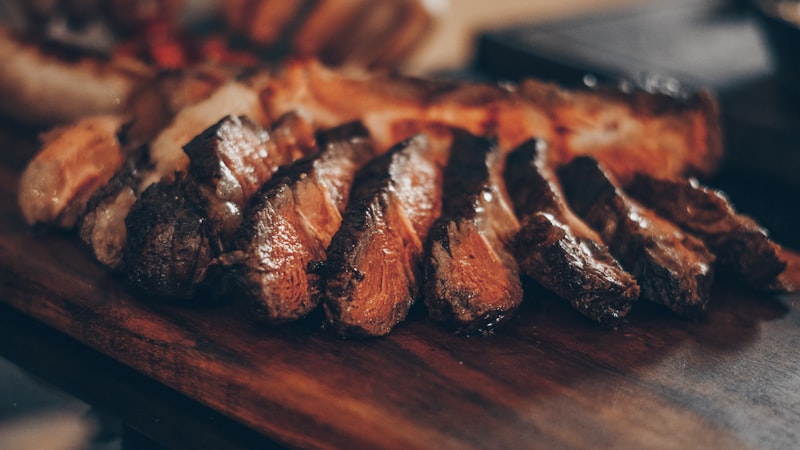
Cut the duck on the diagonal into 1/2-inch-thick slices.
-
35
It is easiest to do this if the thick skin side is on the bottom and you cut directly into the duck flesh.
-
36
Spoon fluffy cooked rice onto a serving platter and nap with plenty of sauce and chunks of quince.
-
37
Fan the duck slices decoratively on top, ladle some additional sauce over, and scatter the pomegranate seeds, if using.