1
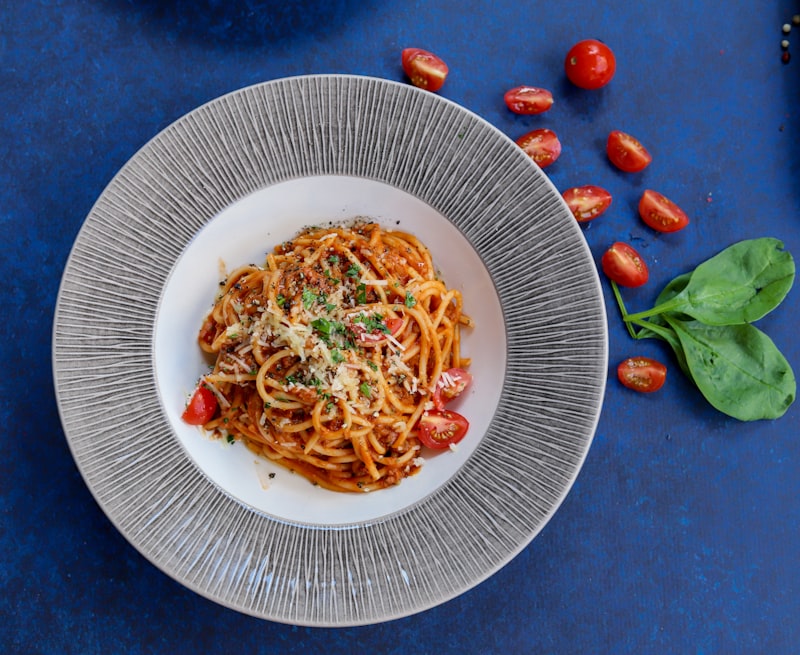
["Put the oil, butter, and chopped onion in a heavy-bottomed pot and turn the heat to medium. Cook and stir until the onion is translucent. Add the celery and carrot and cook for about 2 minutes, stirring to coat the vegetables with fat.", "Add the meat, a large pinch of salt, and some freshly ground pepper. Break the meat up with a fork, stir well, and cook until the meat has lost its raw color.", "Add the milk and let it simmer gently, stirring frequently, until it bubbles away completely (this took quite a while). Stir in about 1/8 teaspoon freshly ground nutmeg.", "Add the wine and let it simmer away (this took a while, too, but I did not want to raise the heat and boil the meat hard). When the wine has evaporated, stir in the tomatoes. (Cooking the meat in milk before adding the wine and tomatoes protects it from the acidic bite of the latter.) When they begin to bubble, turn the heat down so that the sauce cooks at the laziest of simmers, with just an intermittent bubble breaking through to the surface. Cook, uncovered, for 3 hours (or more-she says more is better), stirring from time to time. If the sauce begins to dry out, add 1/2 cup of water whenever necessary to keep it from sticking. At the end, there should be no water left, and the fat must separate from the sauce. Taste for salt.", "Toss with cooked, drained pasta and the remaining tablespoon of butter. Serve freshly grated cheese at the table.", "Hazan advises you to mix the dough on a flat work surface by building a mountain of flour, making a crater in its peak, dumping the eggs into the crater, and mixing them gradually with the flour. Since this method has, in my kitchen, led to unstoppable egg rivulets and much frustration more than once, now I mix pasta dough in a big bowl. Mound the flour in a big bowl and scoop out a deep well in its center. Crack the eggs into the well (I add a little pinch of salt to the eggs; Hazan says it is unnecessary, but I am a compulsive salter). Beat the eggs lightly with a fork for about 1 minute. Then gradually begin to draw flour into the eggs, mixing it in as you continue to beat. Keep going, little by little, until the eggs are no longer runny. Now comes one of those situations where you are supposed to use as little flour as possible, the kind of thing you can judge only with time and experience (I'm not there yet, but my pasta is still quite edible): ""Draw the sides of the mound together with your hands, but push some of the flour to one side, keeping it out of the way until you find you absolutely need it. Work the eggs and flour together, using your fingers and the palms of your hands, until you have a smoothly integrated mixture. If it is still moist, work in more flour."" When you think the dough is right (i.e. does not need any more flour), wash your hands, dry them completely, and plunge your thumb into the dough. If it comes out clean, with no sticky matter on it, no more flour is needed.", "If your dough still doesn't seem quite right, it probably will after you knead it. Knead for 8 minutes, pushing the heel of your palm into the dough, folding it in half, giving it a half turn, and repeating. After 8 minutes, the dough should be ""as smooth as baby skin.""